What Is ChatGPT Art?
ChatGPT Art refers to the process of creating visual content using artificial intelligence powered by ChatGPT and integrated image-generation tools. While ChatGPT itself is primarily text-based, it works alongside AI models like DALL·E to turn written prompts into visually compelling images. This combination allows users to transform simple ideas into artwork without needing traditional design skills.
Think about it like describing a scene to a highly skilled digital artist who instantly paints it for you. You can type something like “a futuristic city at sunset in cyberpunk style,” and the AI produces a detailed image within seconds. This makes AI-generated art more accessible than ever before.
The popularity of ChatGPT art has surged because it removes technical barriers. You do not need to master Photoshop or spend years learning illustration. Instead, creativity becomes the only requirement. This shift is especially powerful for marketers, bloggers, and content creators who need high-quality visuals quickly.
Another reason for its growth is versatility. ChatGPT art can be used for social media posts, blog images, branding, product mockups, and even NFTs. It adapts to different styles, from realistic photography to abstract art, making it a flexible solution for modern digital needs.
How ChatGPT Art Works
Understanding how ChatGPT art works helps you get better results. At its core, the process involves natural language prompts and AI interpretation. You provide a description, and the AI translates it into a visual output.
The system uses deep learning models trained on vast datasets of images and text. These models recognize patterns, styles, and compositions. When you input a prompt, the AI predicts what the image should look like based on similar data it has learned.
The quality of your output depends heavily on your prompt. For example, a vague prompt like “a dog” will produce a basic image. But a detailed prompt such as “a golden retriever sitting in a park during autumn with soft sunlight and cinematic lighting” results in a far more refined image.
There are a few key elements that influence results:
- Style such as realistic, watercolor, or 3D render
- Lighting like soft, dramatic, or neon
- Perspective such as close-up or wide-angle
- Details including textures, colors, and background
The more specific you are, the better the outcome. This is why prompt engineering has become an essential skill in AI art creation.
Benefits of Using ChatGPT Art
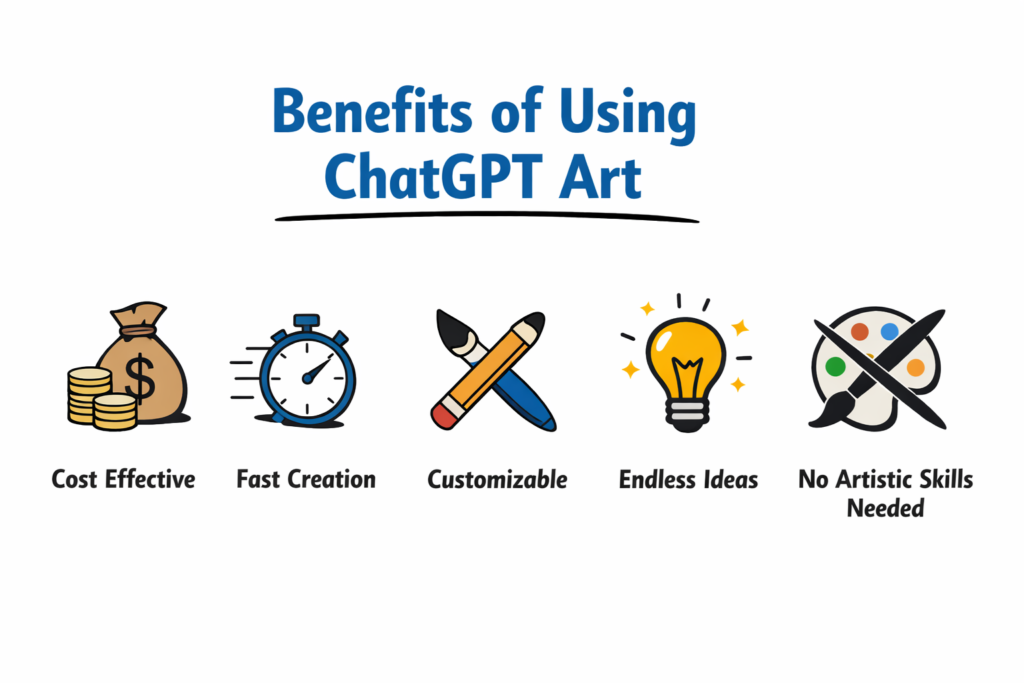
Using ChatGPT art offers several advantages that make it stand out compared to traditional design methods. First, it saves time. What used to take hours or days can now be done in minutes. This is especially useful for content creators working on tight schedules.
Another major benefit is cost efficiency. Hiring designers or purchasing stock images can be expensive. AI-generated art provides a budget-friendly alternative without compromising quality. This makes it ideal for startups and small businesses.
Creativity is also enhanced. The AI can generate unique ideas that you might not have considered. It acts as a creative partner, helping you explore different styles and concepts quickly.
Scalability is another strong point. You can generate multiple variations of an image in seconds. This is perfect for A/B testing in marketing campaigns or creating consistent branding across platforms.
Finally, accessibility plays a big role. Anyone can create professional-looking visuals regardless of skill level. This democratization of design is one of the biggest reasons behind the rapid adoption of AI art tools.
Best Practices for Creating High-Quality ChatGPT Art
Creating impressive ChatGPT art requires more than just typing a prompt. A few strategic practices can significantly improve your results.
Start with clarity. Always describe your idea as clearly as possible. Include details about style, mood, and composition. Avoid vague instructions because they lead to generic outputs.
Experiment with variations. Do not settle for the first result. Generate multiple versions and refine your prompt based on what works best. This iterative approach leads to better outcomes.
Use reference styles. Mentioning specific art styles like “in the style of Pixar” or “oil painting” helps guide the AI more effectively. This adds personality and uniqueness to your images.
Pay attention to composition. Include elements like background, foreground, and subject placement. This helps create balanced and visually appealing images.
Finally, refine and edit. Even though AI does most of the work, small adjustments using editing tools can enhance the final result. Combining AI with human creativity always produces the best outcome.
ChatGPT Art vs Traditional Design
When comparing ChatGPT art to traditional design, the differences are clear. Both have their strengths, but AI is changing how visual content is created.
| Feature | ChatGPT Art | Traditional Design |
|---|---|---|
| Speed | Instant | Time-consuming |
| Cost | Low | High |
| Skill Required | Minimal | Advanced |
| Creativity | AI-assisted | Human-driven |
| Scalability | High | Limited |
Traditional design still holds value, especially for complex projects requiring deep customization. However, ChatGPT art excels in speed, efficiency, and accessibility.
Common Use Cases of ChatGPT Art
The applications of ChatGPT art are vast and growing rapidly. One of the most common uses is in digital marketing. Businesses use AI-generated visuals for ads, social media posts, and website content.
Bloggers and content creators rely on it for featured images and illustrations. This improves engagement and SEO performance without needing stock photos.
E-commerce brands use ChatGPT art for product mockups and promotional graphics. This helps create visually appealing listings that attract customers.
It is also popular in entertainment and gaming. Developers use AI-generated assets for concept art and design inspiration. Even authors use it to create book covers and character visuals.
Education and presentations are another area where it shines. AI-generated images make content more engaging and easier to understand.
Conclusion
ChatGPT art is transforming the way visuals are created. It combines creativity, technology, and efficiency into a single powerful tool. Whether you are a marketer, designer, or beginner, it opens new possibilities for visual storytelling.
By understanding how it works and applying best practices, you can create stunning images that stand out. As AI continues to evolve, the potential of ChatGPT art will only grow, making it an essential tool in the digital landscape.
FAQs
What is ChatGPT art used for?
ChatGPT art is used for creating digital images for blogs, social media, marketing campaigns, and creative projects.
Do I need design skills to create ChatGPT art?
No, you only need to write clear prompts. The AI handles the design process.
Is ChatGPT art free to use?
Some tools offer free versions, but advanced features may require a subscription.
Can ChatGPT create realistic images?
Yes, it can generate highly realistic images depending on the prompt and tool used.