

What Are AI Tools for E-Commerce?
AI tools for e-commerce are software solutions powered by artificial intelligence that help online businesses automate operations, personalize customer experiences, and increase sales. These tools analyze data, predict customer behavior, and handle repetitive tasks that would otherwise take hours of manual work.
Imagine running an online store where product recommendations, customer support, pricing, and marketing campaigns all run automatically. That is exactly what AI brings to the table. It acts like a smart assistant that continuously learns and improves based on customer interactions.
In 2026, e-commerce is more competitive than ever. Businesses that rely only on manual processes struggle to keep up. AI tools provide a significant advantage by making operations faster, smarter, and more efficient. Whether you are a small store owner or managing a large online brand, integrating AI is no longer optional—it is essential for growth.
Benefits of Using AI in E-Commerce
Using AI tools for e-commerce offers a wide range of benefits that directly impact revenue and customer satisfaction. One of the biggest advantages is automation. Tasks like inventory management, email marketing, and customer support can be handled without constant human input.
Personalization is another game-changer. AI analyzes customer data to recommend products based on browsing history and preferences. This creates a tailored shopping experience that increases conversion rates. When customers feel understood, they are more likely to make a purchase.
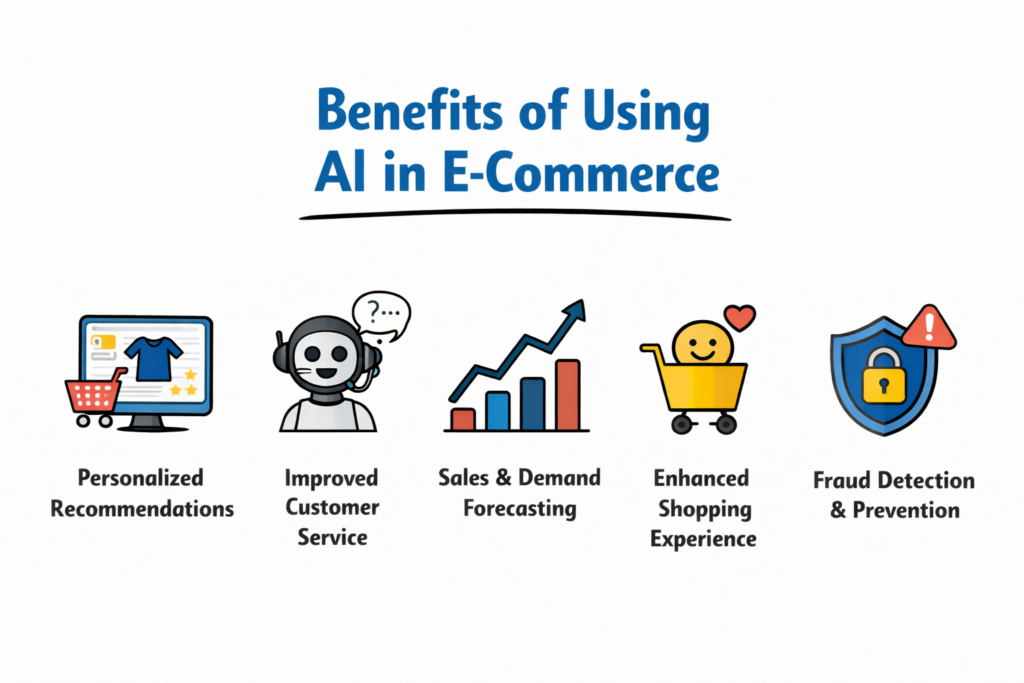
AI also improves decision-making. Instead of guessing what works, you get data-driven insights. These insights help optimize pricing, marketing strategies, and product placement. As a result, businesses can maximize profits while minimizing risks.
Speed is another key factor. AI tools process large amounts of data instantly, allowing businesses to react quickly to trends and customer behavior. This agility is crucial in a fast-paced digital marketplace.
Best AI Tools for E-Commerce in 2026
Choosing the right AI tools for e-commerce can transform your business. Here are some of the top tools making an impact in 2026.
ChatGPT for Customer Support and Content
ChatGPT is widely used for automating customer support and generating product descriptions. It can handle customer queries 24/7, reducing response time and improving satisfaction. It also helps create engaging content for product pages and marketing campaigns.
Shopify Magic
Shopify Magic uses AI to generate product descriptions, manage inventory, and provide insights. It is built directly into Shopify, making it easy for store owners to enhance their operations without additional tools.
Jasper AI for Marketing
Jasper AI is a powerful tool for creating marketing content, including ads, emails, and blog posts. It helps maintain consistency in brand voice while saving time on content creation.
Clerk.io for Personalization
Clerk.io focuses on personalized product recommendations. It uses customer data to suggest products that match individual preferences, increasing sales and customer engagement.
Prisync for Dynamic Pricing
Prisync helps businesses stay competitive by automatically adjusting prices based on market trends and competitor analysis. This ensures optimal pricing strategies at all times.
How AI Tools Increase E-Commerce Sales
The impact of AI tools for e-commerce on sales is significant. One of the main ways they boost revenue is through personalization. When customers see products that match their interests, they are more likely to buy.
AI also improves the customer journey. From the moment a user lands on your website to the checkout process, AI ensures a smooth and engaging experience. This reduces cart abandonment rates and increases conversions.
Another important factor is targeted marketing. AI analyzes customer behavior to create highly targeted campaigns. Instead of sending generic messages, businesses can deliver personalized offers that resonate with specific audiences.
Automation also plays a role in scaling operations. Businesses can handle more customers without increasing workload, allowing for growth without additional costs. Many fast-growing businesses work with a startup agency to set up the right automation systems from the start, ensuring every process scales efficiently.
Create high-converting campaigns faster with an AI ad generator that automates ad creation and optimization.
Tips for Choosing the Right AI Tool
Selecting the best AI tools for e-commerce requires careful consideration. Start by identifying your business needs. Are you looking to improve customer support, marketing, or pricing? Different tools specialize in different areas.
Ease of use is also important. Choose tools that integrate seamlessly with your existing platform. Complicated systems can slow down your workflow instead of improving it.
Budget matters as well. While some tools are affordable, others may require a higher investment. Focus on tools that provide a strong return on investment rather than just low cost.
Finally, consider scalability. As your business grows, your AI tools should be able to handle increased demand without compromising performance.
Conclusion
AI tools for e-commerce are transforming the way online businesses operate. From automation to personalization, these tools provide everything needed to stay competitive in 2026. They save time, improve efficiency, and drive higher sales.
By choosing the right tools and integrating them effectively, businesses can create better customer experiences and achieve sustainable growth. The future of e-commerce belongs to those who embrace AI and use it strategically.
FAQs
What are AI tools for e-commerce used for?
They are used to automate tasks, improve customer experience, and increase sales through data-driven insights.
Which AI tool is best for e-commerce beginners?
Shopify Magic and ChatGPT are great starting points due to their ease of use and powerful features.
Can AI tools really increase sales?
Yes, they enhance personalization, optimize marketing, and improve customer journeys, leading to higher conversions.
Are AI tools expensive for small businesses?
Many tools offer affordable plans, making them accessible for small and medium-sized businesses.
How do I start using AI in my online store?
Begin with one tool based on your needs, such as customer support or marketing, and expand as your business grows.
