Artificial intelligence has changed the way people create content, solve problems, and automate tasks. Whether you’re using AI for writing, coding, design, or research, you’ve likely encountered the term what is a prompt. Understanding prompts is crucial because the quality of your instructions directly affects the quality of the AI’s response.
In simple terms, a prompt is the starting point of communication between a user and an AI system.
What Is a Prompt?
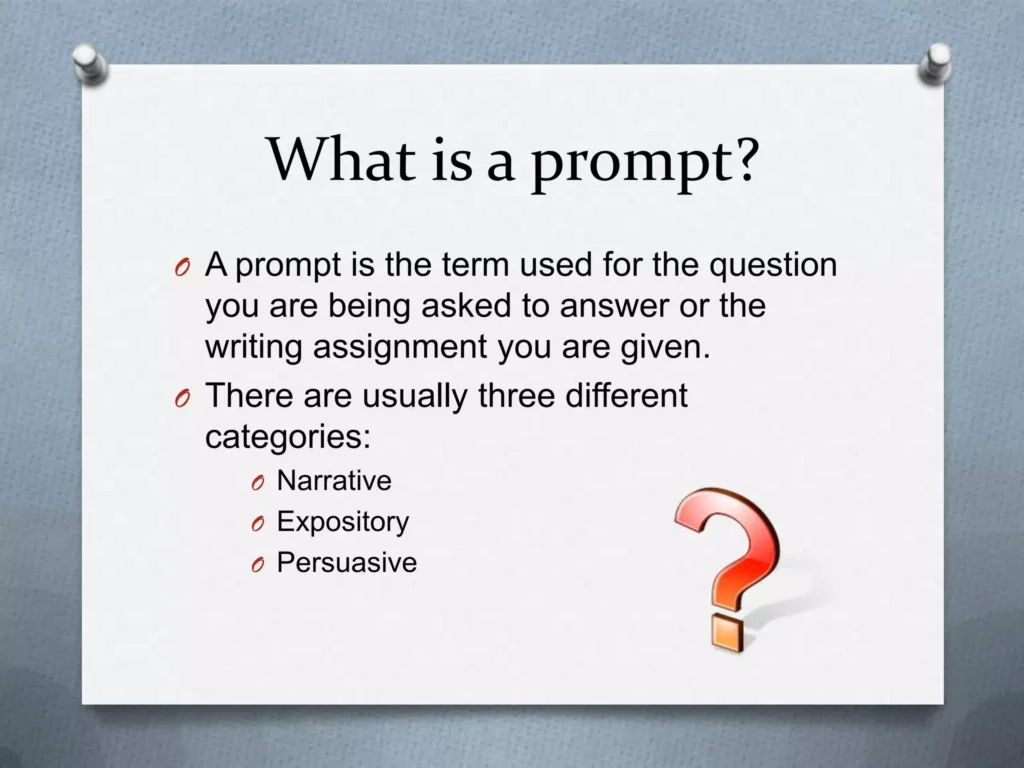
A prompt is a question, instruction, command, or piece of text given to an AI tool to generate a response.
Think of a prompt as directions that tell the AI what you want it to do.
Examples include:
- “Write a blog post about digital marketing.”
- “Explain quantum computing in simple terms.”
- “Create a social media caption for a coffee shop.”
- “Generate a Python script for data analysis.”
The clearer the prompt, the more useful the output is likely to be.
Why Are Prompts Important?
Prompts act as the foundation of AI communication.
A well-written prompt helps:
- Improve response accuracy
- Save time
- Reduce revisions
- Generate relevant content
- Achieve specific goals
Poor prompts often lead to vague or incomplete answers.
1. Prompts Tell AI What You Need
AI systems do not automatically know your objectives.
A prompt provides:
- Context
- Instructions
- Expectations
- Desired outcomes
The more specific the prompt, the easier it is for AI to generate useful results.
2. Different Types of Prompts
There are several common prompt formats.
Question Prompts
Ask the AI a direct question.
Example:
“What is search engine optimization?”
Instruction Prompts
Tell the AI to perform a task.
Example:
“Write a 1,000-word article about social media marketing.”
Creative Prompts
Encourage creative outputs.
Example:
“Write a short science-fiction story set on Mars.”
Analytical Prompts
Request analysis or evaluation.
Example:
“Compare content marketing and email marketing.”
3. What Makes a Good Prompt?
An effective prompt is:
- Clear
- Specific
- Detailed
- Goal-oriented
- Easy to understand
For example:
Weak Prompt
“Write about marketing.”
Strong Prompt
“Write a 1,500-word beginner’s guide to content marketing with practical examples and FAQs.”
The second prompt provides more direction and context.
4. Prompt Engineering Explained
Prompt engineering is the process of designing prompts to achieve better AI outputs.
It involves:
- Structuring instructions
- Providing context
- Defining formats
- Refining requests
Prompt engineering has become an important skill in the age of artificial intelligence.
5. Prompts Are Used Beyond AI Chatbots
Many technologies rely on prompts, including:
- AI writing tools
- Image generators
- Coding assistants
- Voice assistants
- Research platforms
Prompts serve as the bridge between human intent and machine-generated output.
6. Common Prompt Mistakes
Many users make avoidable errors when creating prompts.
Being Too Vague
Unclear instructions often produce generic results.
Providing No Context
AI performs better when it understands the purpose of the task.
Ignoring Formatting Requirements
Specifying desired formats can improve output quality.
Asking Multiple Unrelated Questions
Complex prompts can confuse the system if objectives are unclear.
7. Examples of Effective AI Prompts
Here are a few examples:
Content Writing
“Write a 1,200-word SEO-friendly article about email marketing for beginners.”
Social Media
“Create 10 Instagram captions for a fitness brand targeting young professionals.”
Coding
“Generate a Python script that reads a CSV file and calculates average sales.”
Business
“Develop a marketing strategy for a new online clothing store.”
These prompts clearly define the expected outcome.
Benefits of Learning Prompt Writing
Understanding prompts can help you:
- Improve productivity
- Generate better AI responses
- Create higher-quality content
- Automate repetitive tasks
- Enhance problem-solving
Prompt-writing skills are becoming increasingly valuable across industries.
The Future of Prompts
As AI technology advances, prompts will continue evolving.
Future developments may include:
- Voice-based prompting
- Multimodal prompts
- Context-aware AI systems
- Personalized prompt optimization
Despite these advancements, clear communication will remain essential.
Conclusion
If you’ve ever wondered what is a prompt, it is simply the instruction or input given to an AI system to generate a response. Prompts can be questions, commands, descriptions, or detailed requests that guide AI toward a desired outcome.
Learning how to create effective prompts can significantly improve the quality of AI-generated content, making it a valuable skill for marketers, business owners, students, developers, and content creators alike.
FAQs
What is a prompt in AI?
A prompt is an instruction, question, or input given to an AI system to generate a response.
Why are prompts important?
Prompts help AI understand what the user wants, leading to more accurate and relevant results.
What is prompt engineering?
Prompt engineering is the practice of designing prompts to improve AI-generated outputs.
Can better prompts improve AI responses?
Yes. Clear, detailed prompts typically produce higher-quality and more accurate results.