

AI Transformation Is a Problem of Governance
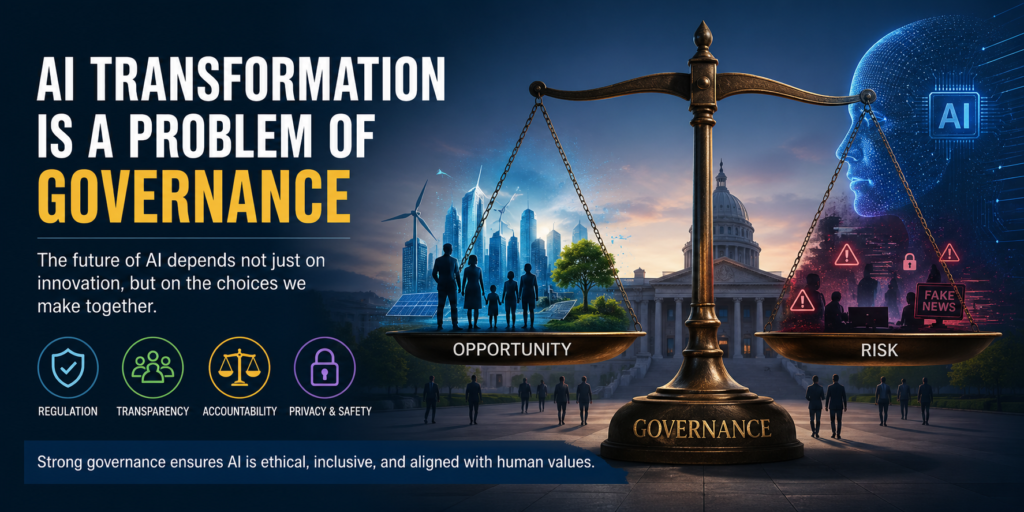
AI transformation is often seen as a technical challenge, but the real issue lies in governance. Organizations struggle not because of tools, but due to unclear leadership, policies, and accountability structures.
Effective AI adoption depends on strong governance frameworks. Without them, even advanced technologies fail to deliver value.
Why Governance Matters in AI Transformation
Governance defines how decisions are made, who is responsible, and how risks are managed. In AI projects, this becomes critical due to ethical, legal, and operational complexities.
Without governance, AI systems can create bias, security risks, and compliance issues. Strong oversight ensures responsible and scalable implementation.
Key Governance Challenges in AI Adoption
Lack of Clear Leadership
Many organizations do not assign ownership for AI initiatives. This leads to confusion and inconsistent decision-making.
Clear leadership ensures alignment between business goals and AI strategy. It also improves accountability across teams.
Ethical and Regulatory Risks
AI systems can introduce bias and privacy concerns if not properly governed. Regulations are evolving, making compliance more complex.
Organizations must implement ethical guidelines and monitoring systems. This reduces risks and builds trust.
Data Management Issues
AI relies on high-quality data, but poor data governance can limit effectiveness. Inconsistent data policies lead to unreliable outcomes.
Strong data governance ensures accuracy, security, and compliance. It is a foundation for successful AI systems.
Integration with Business Strategy
AI initiatives often operate in isolation from core business goals. This reduces their impact and scalability.
Governance frameworks help align AI with organizational objectives. This ensures measurable results and long-term value.
Core Components of AI Governance
Policy and Framework Development
Organizations need clear policies for AI usage, ethics, and compliance. These frameworks guide decision-making and implementation.
They also ensure consistency across departments and projects.
Risk Management and Compliance
AI governance includes identifying and mitigating risks. This involves monitoring algorithms, data usage, and system outputs.
Compliance with legal standards is essential for avoiding penalties.
Transparency and Accountability
Transparent AI systems build trust with users and stakeholders. Organizations must explain how AI decisions are made.
Accountability ensures that teams take responsibility for outcomes.
Continuous Monitoring and Improvement
AI systems evolve over time, requiring ongoing oversight. Governance frameworks must include regular audits and updates.
This ensures long-term reliability and performance.
Benefits of Strong AI Governance
Strong governance improves decision-making and reduces operational risks. It ensures that AI initiatives deliver consistent and measurable results.
It also enhances trust among customers, regulators, and stakeholders. This is essential for sustainable growth.
Best Practices for AI Governance
Organizations should establish dedicated AI governance teams. These teams oversee strategy, compliance, and performance.
They should also invest in training and awareness programs. This helps employees understand governance requirements and ethical considerations.
Clear documentation and standardized processes are also important. They ensure consistency and scalability across projects.

Future of AI Governance
AI governance will become more important as technologies advance. Regulations will continue to evolve, requiring organizations to adapt quickly.
Companies that prioritize governance will gain a competitive advantage. They will be better positioned to scale AI responsibly.
FAQs
Why is AI transformation considered a governance problem
Because success depends on leadership, policies, and accountability rather than just technology.
What is AI governance
AI governance refers to the frameworks and policies that guide the development and use of AI systems.
How does governance impact AI success
It ensures alignment with business goals, reduces risks, and improves decision-making.
What are the risks of poor AI governance
Risks include bias, compliance issues, data breaches, and failed implementations.
How can organizations improve AI governance
They can establish clear policies, assign leadership, and implement continuous monitoring systems.
Conclusion
AI transformation is a problem of governance, not just technology. Organizations must focus on leadership, policy, and accountability to succeed.
By building strong governance frameworks, businesses can unlock the full potential of AI while minimizing risks.
