Artificial intelligence is transforming industries across the globe, creating a strong demand for skilled professionals who can build, deploy, and manage AI-powered systems. As organizations continue investing in automation, machine learning, and intelligent applications, AI engineer jobs have become some of the most sought-after roles in the technology sector.
Companies ranging from startups to multinational corporations are aggressively hiring AI engineers to develop innovative solutions that improve efficiency, decision-making and customer experiences.
What Are AI Engineer Jobs?
AI engineer jobs involve designing, developing, and implementing artificial intelligence systems that can perform tasks typically requiring human intelligence.
AI engineers work on technologies such as:
- Machine learning
- Deep learning
- Natural language processing (NLP)
- Computer vision
- Generative AI
- Predictive analytics
Their goal is to create intelligent systems that solve real-world problems.
Why Demand for AI Engineers Is Growing
The rapid adoption of AI technologies has created significant demand for qualified professionals.
Companies use AI to:
- Automate business processes
- Improve customer support
- Analyze large datasets
- Enhance cybersecurity
- Optimize operations
As AI becomes a competitive advantage, hiring skilled engineers remains a priority.
Key Responsibilities of an AI Engineer
AI engineers perform a variety of technical tasks.
Common responsibilities include:
- Developing AI models
- Training machine learning algorithms
- Processing large datasets
- Deploying AI applications
- Monitoring model performance
- Improving system accuracy
The exact duties vary depending on the organization and project.
Essential Skills for AI Engineer Jobs
Successful AI engineers typically possess both technical and analytical skills.
Important skills include:
Programming Languages
- Python
- Java
- C++
- R
Machine Learning
- Supervised learning
- Unsupervised learning
- Reinforcement learning
Data Science
- Data analysis
- Statistical modeling
- Data visualization
AI Frameworks
- TensorFlow
- PyTorch
- Scikit-learn
- Keras
These skills form the foundation of modern AI development.
Educational Requirements
Most AI engineer jobs require a background in technical fields such as:
- Computer Science
- Artificial Intelligence
- Data Science
- Software Engineering
- Mathematics
Many employers prefer candidates with bachelor’s or master’s degrees, although practical experience is increasingly valued.
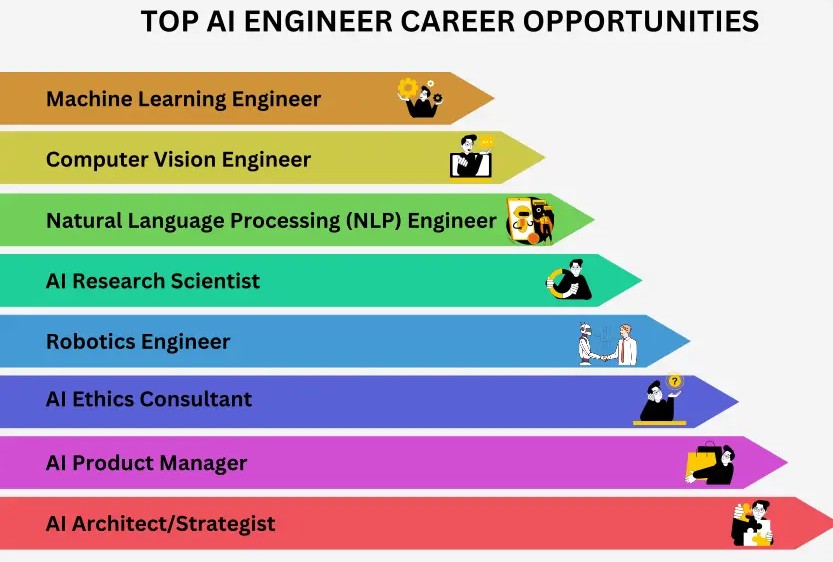
Types of AI Engineer Jobs
The AI field offers numerous specialization opportunities.
Popular roles include:
Machine Learning Engineer
Focuses on building predictive models and learning systems.
NLP Engineer
Works with language-based AI applications such as chatbots and virtual assistants.
Computer Vision Engineer
Develops systems that interpret images and video data.
Generative AI Engineer
Builds applications using large language models and generative AI technologies.
AI Research Engineer
Explores advanced AI techniques and emerging technologies.
Industries Hiring AI Engineers
AI talent is needed across many sectors.
Industries actively recruiting include:
- Technology
- Healthcare
- Finance
- Retail
- Manufacturing
- Automotive
- Telecommunications
AI adoption continues expanding into new markets every year.
Salary Expectations for AI Engineers
One reason AI engineer jobs are highly attractive is the earning potential.
Factors influencing salary include:
- Experience level
- Location
- Technical expertise
- Industry
- Company size
Senior AI engineers often command significantly higher salaries due to specialized knowledge and experience.
How to Start a Career in AI Engineering
If you’re interested in becoming an AI engineer, consider these steps:
- Learn programming fundamentals.
- Study machine learning concepts.
- Build AI projects.
- Create a portfolio.
- Gain practical experience.
- Earn relevant certifications.
- Apply for entry-level AI positions.
Hands-on experience is often as important as formal education.
Certifications That Can Help
Popular certifications include:
- Machine Learning Certifications
- AI Fundamentals Programs
- Cloud AI Certifications
- Data Science Certifications
These credentials can strengthen your resume and demonstrate expertise.
Future of AI Engineer Jobs
The future of AI engineer jobs looks exceptionally strong.
Emerging trends include:
- Generative AI development
- Autonomous systems
- AI-powered robotics
- Edge AI solutions
- Advanced automation platforms
Organizations are expected to continue increasing AI investments for years to come.
Benefits of Working as an AI Engineer
Many professionals pursue AI careers because they offer:
- High earning potential
- Strong job demand
- Continuous learning opportunities
- Career flexibility
- Impactful projects
AI engineering remains one of the fastest-growing career paths in technology.
Conclusion
AI engineer jobs are among the most exciting and rewarding opportunities in today’s technology landscape. As artificial intelligence continues transforming industries, businesses need skilled professionals who can develop intelligent systems, solve complex problems, and drive innovation.
Whether you’re a student, software developer, or technology enthusiast, building AI skills can open doors to a rapidly growing and highly lucrative career field.
FAQs
What does an AI engineer do?
An AI engineer develops, trains, and deploys artificial intelligence systems and machine learning models.
What skills are required for AI engineer jobs?
Key skills include Python programming, machine learning, data science, AI frameworks, and problem-solving.
Are AI engineer jobs in demand?
Yes, AI engineers are among the most sought-after technology professionals worldwide.
Do I need a degree to become an AI engineer?
While many employers prefer degrees, practical experience and strong project portfolios can also help secure opportunities.